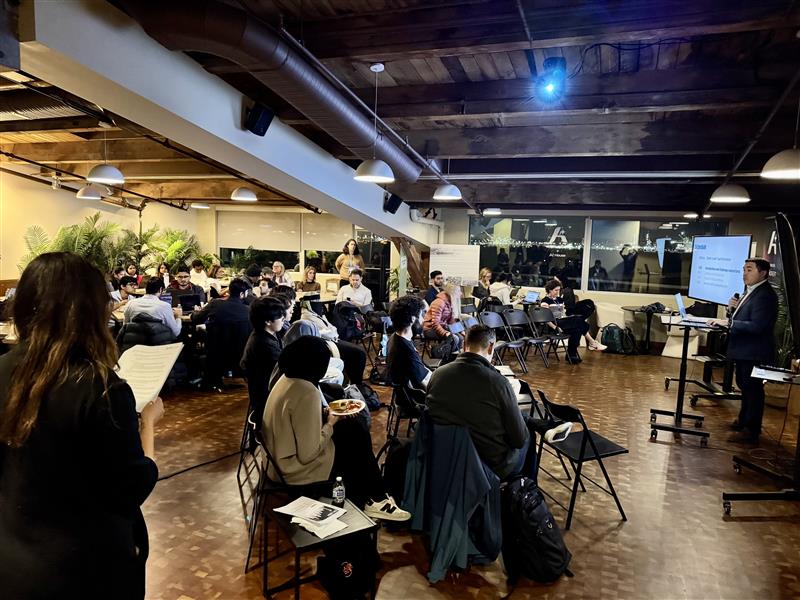
At the City of Seattle, we’re leaning in on AI and learning how emerging technologies can help us deliver faster, fairer, and more accessible services for residents.
Last March, the AI House launched on Seattle’s downtown waterfront as a public-private partnership dedicated to growing Seattle’s next era of AI, bringing together entrepreneurs, investors, students, and community leaders under one roof to build, experiment, and collaborate. Then, just a few months ago at the same venue, we announced the City of Seattle’s AI Plan: our promise to use AI responsibly and effectively to solve real resident challenges.
One of the ways we’re turning that plan into action is through our Civic Innovation Hackathon Series. With the support of our partners AI2 Incubator, We Build With AI, Bolt.New, and Ada Developers Academy, these events have created a hands-on environment where anyone can contribute to how we address the challenges our communities face. And with each hackathon, the momentum keeps growing. Over 170 people registered and 18 teams competed at the November 6 Customer Service Hackathon!
These hackathons are a space where community creativity meets civic impact. Thank you to everyone who joined us to help envision a more responsive, transparent, and resident-centered Seattle.
A Customer Service Civic Challenge
On November 6, we focused on one of the most common and personal touchpoints between residents and the City government: customer service requests.
Teams were challenged to use open data and AI tools to prototype ideas that improve the customer service process or experience. Our underlying goal is to simplify processes, improve teamwork, and focus on what matters most: helping people and delivering better results.
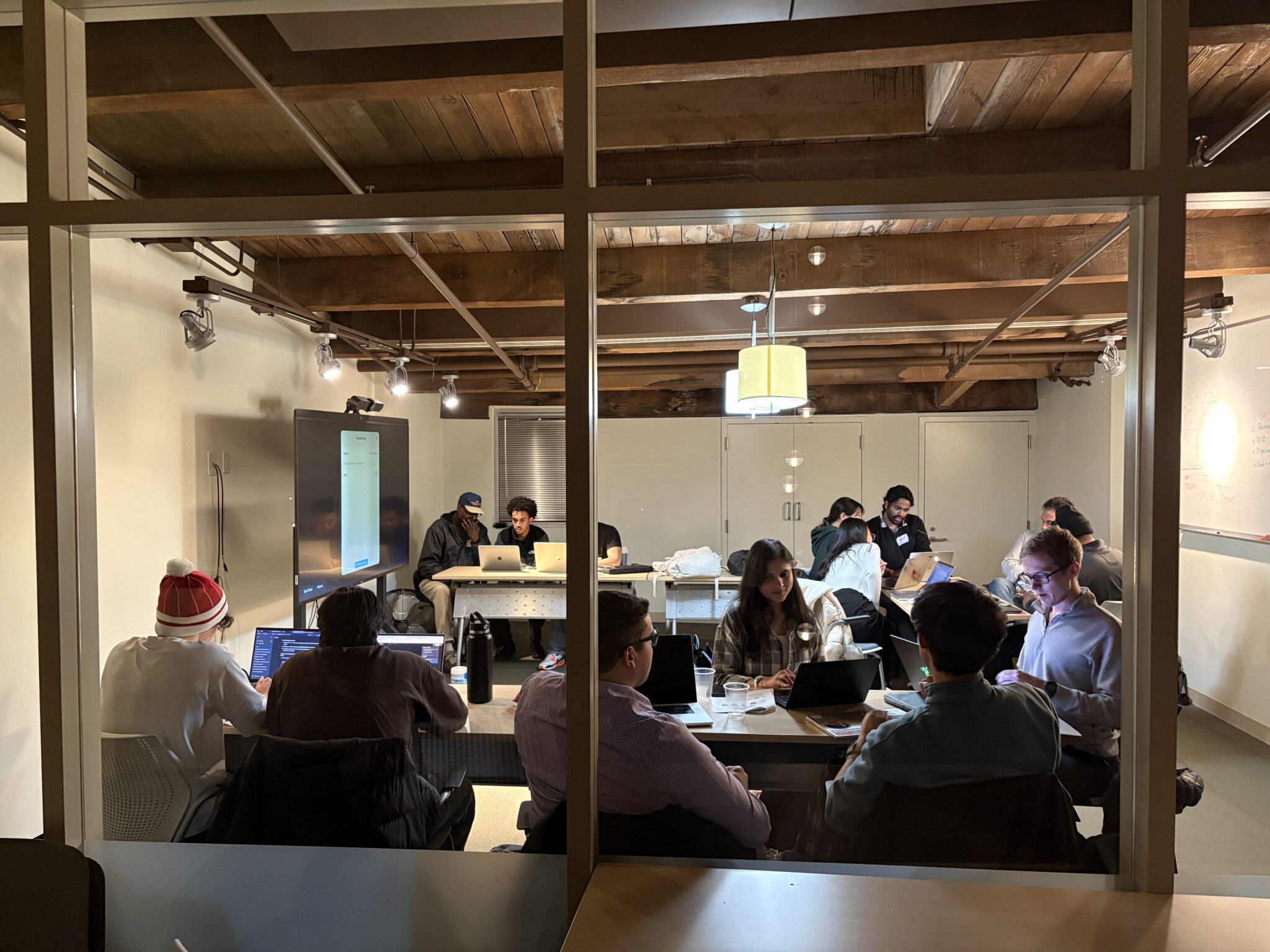
We challenged teams to prototype ideas like agents, chatbots, a better Customer Service Status Tracker, and a better Customer Service Dashboard than the ones that the Innovation and Performance Team has published, using the transparent open data sets that feed them:
Customer Service Requests (CSRs)
A dataset containing selected information on service requests submitted via the City’s Customer Service Requests portal or the Find It, Fix It mobile app.
🔗 Customer Service Requests Open Data
Customer Service Request Tracking Data
A dataset summarizing status updates for a subset of service requests, assembled to feed a pilot status update tracker.
🔗 Customer Service Request Tracking Open Data
Results: New Ideas and Insights
A common theme across many hackathon projects was the use of conversational AI to simplify how residents interact with city services, particularly for submitting, tracking, and understanding service requests. Several teams, with projects named PACbot, HeyCity! and AURA IN HELP, built intelligent agents that parse natural language, auto-route requests, and provide estimated resolution times based on historical data.
Others, such as SEA Tracker and City of Seattle Hotspotter, emphasized data visualization and dashboards to make service request data more accessible and actionable for both citizens and city staff. Accessibility was also a notable theme, with Friendly Neighborhood Hackerman using Whisper to support non-English speakers.
Advanced implementations that go beyond basic chatbot functionality also stood out. AURA IN HELP introduced a “Dynamic ETA” system and a “Trust-Risk Dashboard” to quantify citizen frustration and department workload. PACbot demonstrated a robust hybrid architecture with fallback systems and voice-first accessibility, while Rainy Day Friend integrated a chatbot with a city-facing dashboard for a full-circle feedback loop.
Promising ideas include: AI-assisted auto-routing of service requests, frustration-aware dashboards for city managers, multilingual support for inclusivity, and predictive analytics for resource planning. These solutions enhance user experience and offer scalable insights for City operations.
Congratulations to the three finalists!
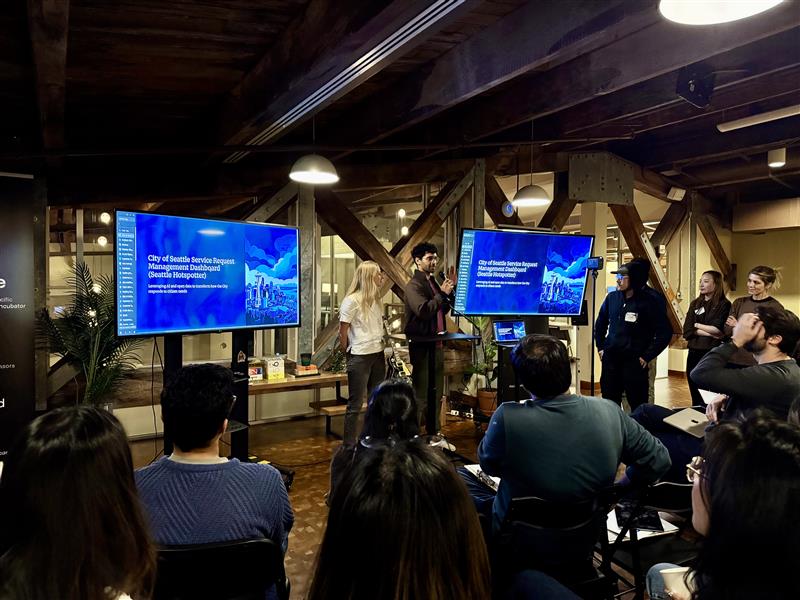
First Place Team: Hotspotters
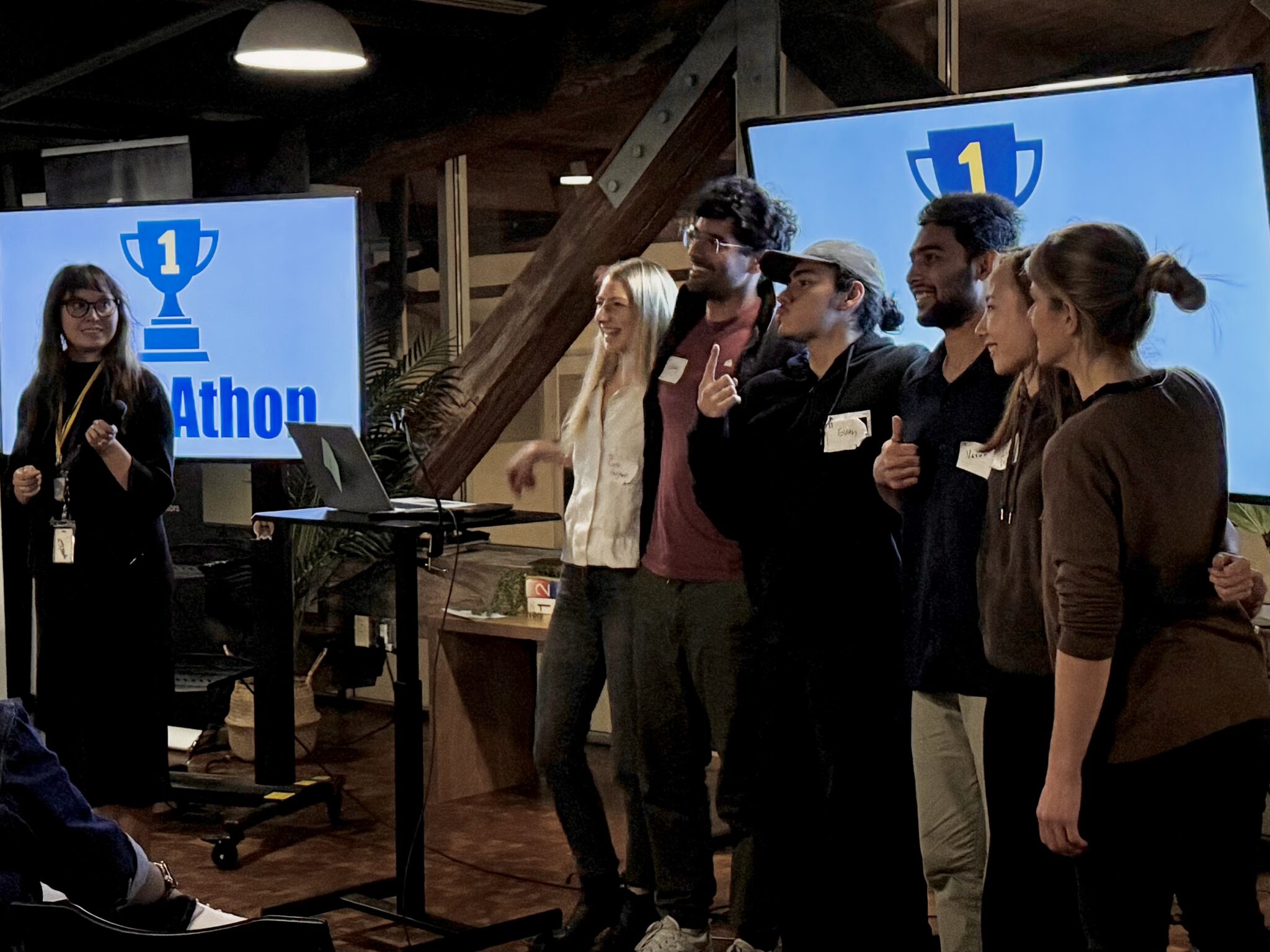
- Team members: Even Soriano, Abhay Sawhney, Varun Tej, Lina Wang, Beatrice Ottria, Cate Guyman
- App: 🔗 City of Seattle Hotspotter
- Description: “For the project itself, our goal was to help City staff get from service requests to clear, actionable insights faster. After speaking with a few employees, we learned that even though every request has a location, departments still spend a lot of time sorting and prioritizing them manually before going out into the field. Using Seattle’s Open Data and Bolt, we prototyped an employee dashboard that pulls all those requests into one place. It shows a map of hotspots and potential duplicates, includes an AI assistant that can answer questions like ‘Which neighborhoods are seeing more encampment reports this month,’ and offers a route planner to minimize travel time while investigating issues.”
- Team quote: “We really enjoyed learning from City employees about their work and seeing how much they care about Seattle’s neighborhoods. It was also fun to see how quickly we could go from an idea to a working prototype in Bolt. The hackathon made it clear that small improvements in how staff explore data and plan their day could save real time and help them respond to residents more efficiently.”
Second Place Team: 5 Star Rating
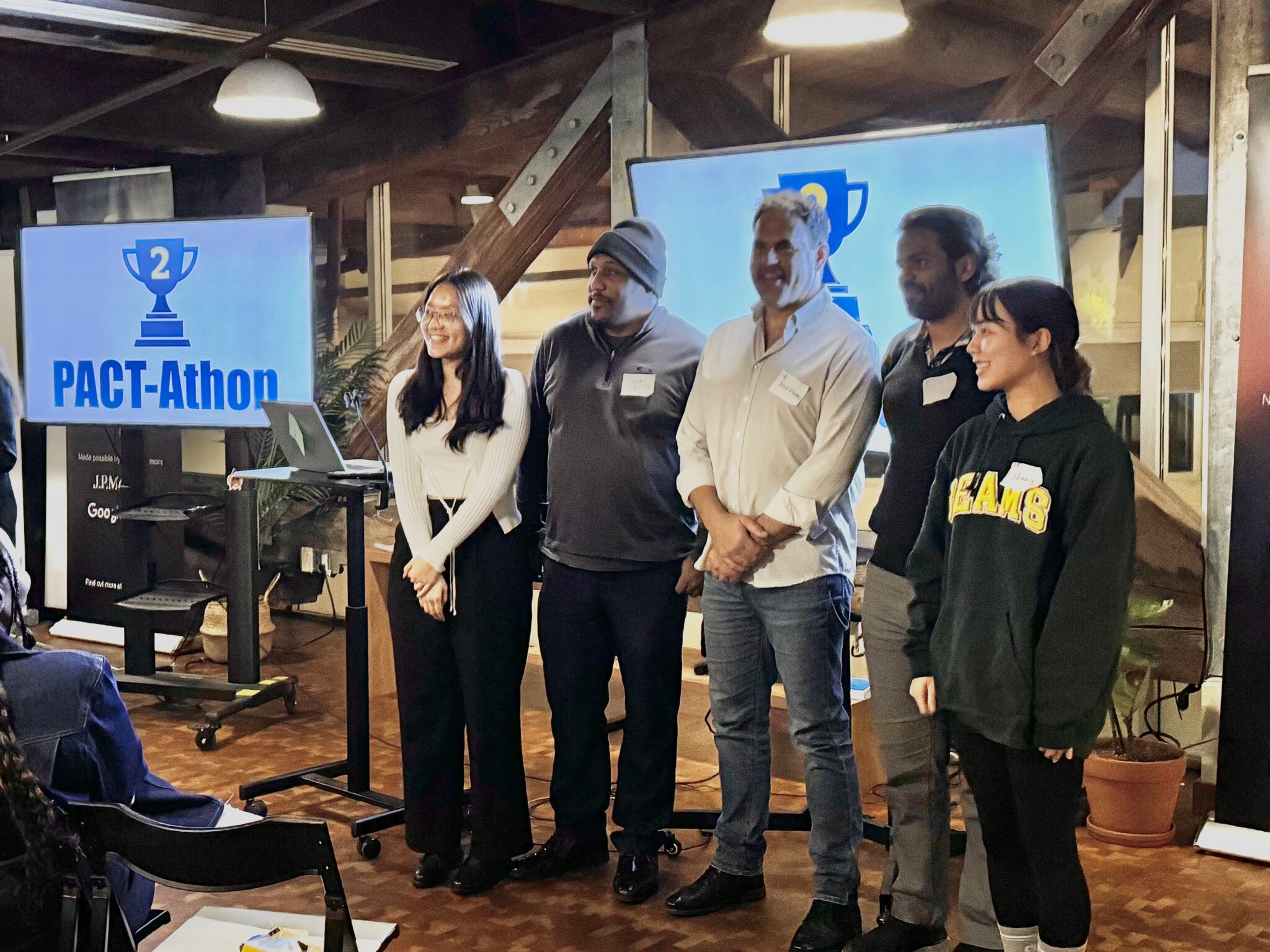
- Team members: Penny Yeh, Nawaf Alansari, Andrew Powers, Kevin O’Leary, Christine Tang
- App: 🔗 Rainy Day Friend
- Description: “The Rainy Day Friend project was created as an AI-powered civic compliance platform to address the PACT-Athon’s challenge of improving customer service through open data and AI tools. Our core motivation was to eliminate the painful cycle of resident frustration, where users wait for a chatbot to direct them to an unhelpful resource or spend hours sifting through dense legal text. We recognized the primary pain point in customer service: residents need answers to their specific regulatory questions without the runaround. By directly using the actual Seattle Municipal Code (SMC) regulations as our data source, the platform ensures residents can solve their problems in simple, natural language, making complex city services accessible and responsive. This directly supports the broader PACT goal of “Improving Customer Service” and delivering responsive government services by removing the friction and confusion that lead to resident frustration and mistrust.”
- Team quote: “Our approach was built around a sophisticated Hybrid Retrieval-Augmented Generation (RAG) architecture to ensure highly accurate, citation-backed answers. The resident-facing intelligent chat interface allows users to ask questions in plain English, and the system automatically provides property-aware responses by integrating real-time data from the King County GIS API. This project is a direct evolution of our previous work [at the previous hackathon], where we learned the crucial lesson of “Getting it Right from the Start” by focusing on the problem of code complexity and clarity that drives permit delays. Our prior PACT-Athon project PreAssess used an AI (Claude) to translate SMC into actionable checklists to address 64% of application rejection pain points. Rainy Day Friend scales this vision, moving beyond checklists to a real-time, conversational tool that not only gives immediate, property-specific answers but also provides an Analytics Dashboard for City Officials. This dashboard offers powerful insights, like geographic clustering and sentiment analysis. to help city staff spot service bottlenecks and identify which code sections are causing the most confusion, fulfilling the hackathon’s core problem of difficulty in spotting and improving service delivery. This project marks an exciting step forward in our mission to reduce confusion, speed up resolutions, and help residents feel more confident in digital government services. It was especially encouraging to see how quickly we could bring an AI system to life that gives clear, real-data answers, showing that modern tools can make civic services not just more transparent, but genuinely easier and friendlier to use.”
Third Place Team: Serva
- Team members: Shuab Mohamed, Joewah Yu, JR Josiah.
- App: ServaSense
- Quote: “Initially it was just us two working together to draft up an idea for our project. We felt confident with our idea and wanted to get a second opinion on it. We decided to get up and go outside to look for a person to give us feedback on our idea, that’s when we met our third member, JR. JR initially didn’t have a team and we asked him to join us for this hackathon. With his feedback, we went back to the drawing board and created an outline of how we want to tackle this problem and format our website. JR helped us by making us think of the little details. For example, he put us in the shoes of the user – how does a user navigate our website? How can we make the website more user friendly? These questions ultimately helped us create our final idea, and with the help of AI, we finally made our website. The biggest takeaway from this project was having an open mind and being willing to take criticism. Without it, our idea would’ve gone nowhere. Even though it was only us three working on the project, having AI to assist us in making our idea come to life was an awesome feeling, and shows just how powerful AI is. We all really enjoyed working on this project and hope to take part in future events!” – Joewah
Introducing PACT: A New Approach to Service and Accountability
Our last two hackathons were designed in the spirit of the City’s newest team: the Permitting Accountability and Customer Trust (PACT) team. Formed to streamline permitting and improve customer experience, PACT bridges process, data, and technology to strengthen trust with residents.
Today, residents frequently submit service requests without knowing how long resolution will take or what to expect. Some requests close without communication; others seem to disappear entirely. Meanwhile, City departments track and manage customer service in different ways, making it hard to identify bottlenecks and improve service delivery.
The PACT team is working to change that by:
- Defining and tracking expected response times, and
- Connecting City systems to improve tracking, communication, and transparency.
AI and data tools present huge opportunities to make this experience better- for staff who manage requests, and for residents who rely on them.
Special Thanks to Our Partners
- AI2 Incubator supports early-stage AI startups by providing mentorship, funding, technical resources, and community to help them rapidly develop and scale their ideas.
- We Build With AI is a community of AI experts that empower people to rapidly prototype and launch projects using AI through hands-on workshops, hackathons, and collaborative events.
- Bolt is an AI-powered code editor that lets you instantly prototype, build, and deploy full-stack web apps in your browser with minimal setup.
- Ada Developers Academy’s mission is to prepare women and gender expansive adults to be software developers while advocating for inclusive and equitable work environments.
Some language in this post was generated using Microsoft CoPilot. All content was edited and fact-checked by staff on the Innovation & Performance Team. Learn more about the City of Seattle’s AI Policy.