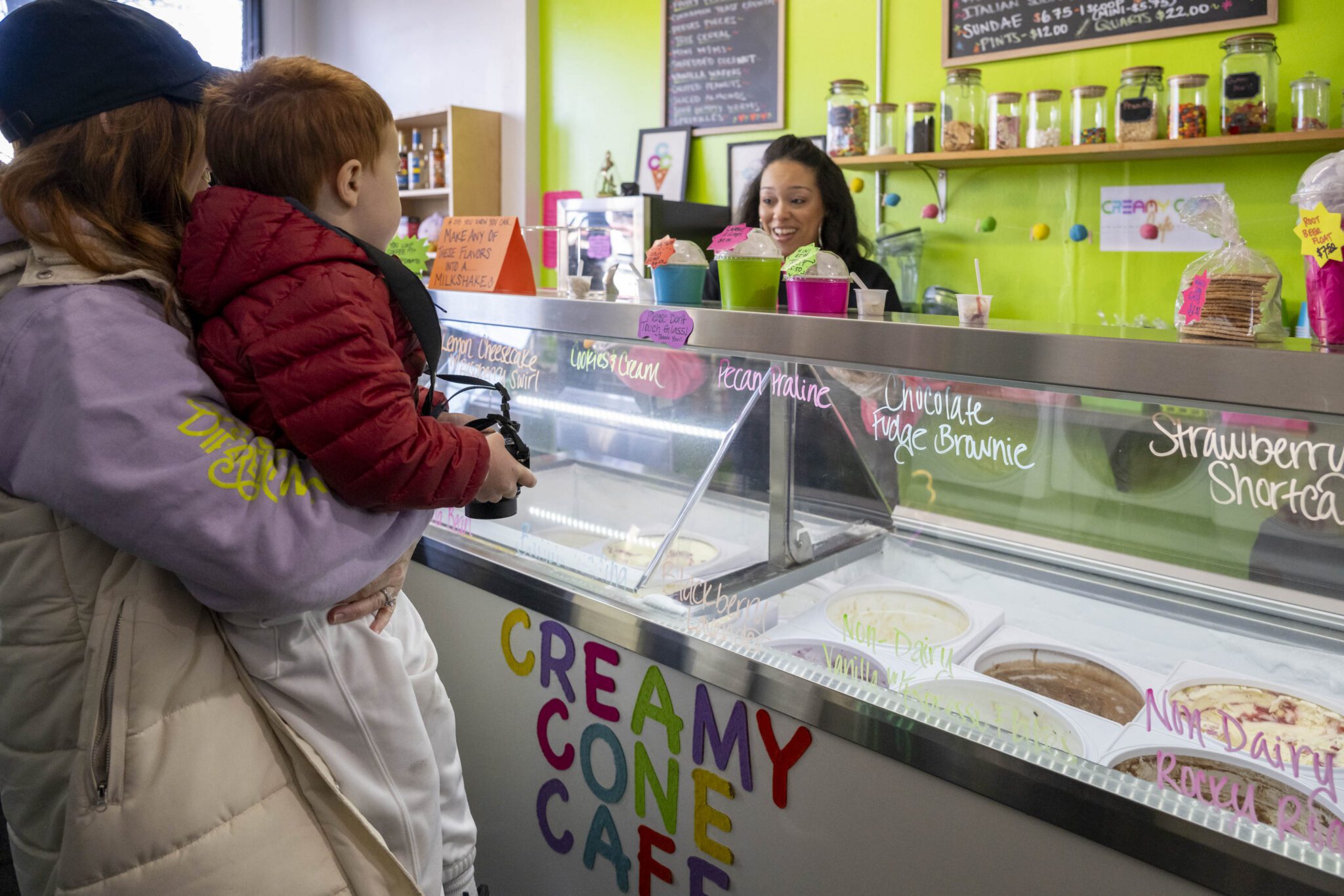
“[Starting my business] was kind of a black hole of like, ‘I don’t really know where I need to start.’” -Small business owner
Small business owners face a “black hole” of different regulatory agencies and unclear processes to open a new location in Seattle. Too often, small business owners sign a lease with little understanding of all the requirements to remodel a space for their needs. Requirements across agencies can add up such that some small businesses end up spending multiple years and hundreds of thousands of dollars just to open.
In early 2025, Innovation & Performance (IP) convened City and King County regulatory agencies to form a new working group dedicated to improving permitting processes for small businesses.
To demystify the process and empower business owners with the tools to be successful, we conducted user research and worked with stakeholders to publish a new Opening a Business Location guide.
By the Numbers
- Net margins for restaurants decreased from 4% to 1.5% in 2024
- 63 steps and 16 forms to open a restaurant in Seattle, according to a 2022 analysis
- Average of one year from construction permit application to final inspection for restaurant projects
Challenge
Small businesses are at a tipping point for survival in Seattle for multiple reasons. Costs have risen dramatically across the board, from rent to supplies to insurance and more. Consumer habits changed during the pandemic, and many businesses are still working to recover from the reduced foot traffic and decrease in customers since 2020.
Another lingering impact of the COVID-19 crisis is the high commercial vacancy rate in downtown Seattle and other neighborhoods. While foot traffic is increasing, filling those vacancies is critical to ensuring neighborhood business districts can continue to recover and thrive.
In many cases, however, businesses trying to move into these vacant locations face an uphill battle of confusing regulations and opaque timelines. Well-intentioned building code and regulations can have unintended consequences and add up to an eye-popping number of requirements to remodel a small commercial space. Too often, business owners sign a lease on a space without a full understanding of how long it will take to get permits and complete the required work to remodel the location for their needs. This costs small businesses a great deal of unexpected time and money and sometimes can prevent businesses from opening at all.
Demystifying the Process and Cutting Red Tape
IP started with user research in early 2025 to understand the pain points for small businesses opening and operating in Seattle. We interviewed small business owners one-on-one to map their journey to open a location and identify the biggest barriers. We also partnered with the Office of Economic Development (OED) to convene representatives from neighborhood business districts to share their recommendations for the City to better support small businesses.
One message we heard loud and clear: small business owners need up-front information about what they need to do, how long it will take, and how much it will cost. But this information, critical for opening a business on time and on budget, was scattered across agency websites and buried in confusing technical language. Recognizing this, IP partnered with City departments and Public Health – Seattle & King County to develop a step-by-step guide to open a business in Seattle, with time estimates and information on how much different permits cost. The information is available in the seven languages most spoken by Seattle residents (in addition to English), and printed versions are available for in-person outreach to entrepreneurs. We developed the guide based on two rounds of user testing with small businesses and local commercial space experts to make sure it was helpful and relevant to our target audience.
While demystifying the process is important, it is also critical to make the requirements and processes themselves less cumbersome. IP supported the Seattle Department and Construction and Inspections (SDCI) and OED to develop legislation, passed in September 2025, that removes a costly barrier for small business tenant improvement projects. Under previous code, a small business looking to move into a space vacant since COVID could be classified as a “substantial alteration.” This classification required the business to retrofit the entire building they were moving into, not just the space the business was occupying. This could dramatically raise the cost of opening a new business, especially in older buildings. Under this legislation, businesses in small spaces are now exempted from substantial alteration requirements.
Dovetailing with IP’s efforts to streamline permitting for housing projects, IP also convened City and King County regulatory agencies to form a new working group dedicated to improving permitting processes for small businesses. This workgroup meets monthly to share information across agencies and identify problems and solutions to better serve small businesses.
SDCI also revamped its existing small business permit coaching program to greatly expedite permits for qualifying projects, saving participants weeks of waiting for construction permits.
Results
- 2+ months in potential time savings for construction permits for small business projects participating in the SDCI expedited permitting program
- Substantial alteration reform legislation is estimated to help reactivate more than 50 small commercial storefronts by 2030
Partners
- Seattle Office of Economic Development
- Seattle Department of Construction and Inspections
- Public Health – Seattle & King County
- Seattle City Finance
- Seattle City Light
- Seattle Department of Neighborhoods
- Seattle Fire Department
- Seattle Public Utilities
- Seattle Department of Transportation